Art can be inspired by a muse, but art can also be the muse. Many artists find inspiration through their passions, then allowing that passion to fuel their work. In short, people can experience art that then emboldens them to create their own.
Model: Kaia Lewis
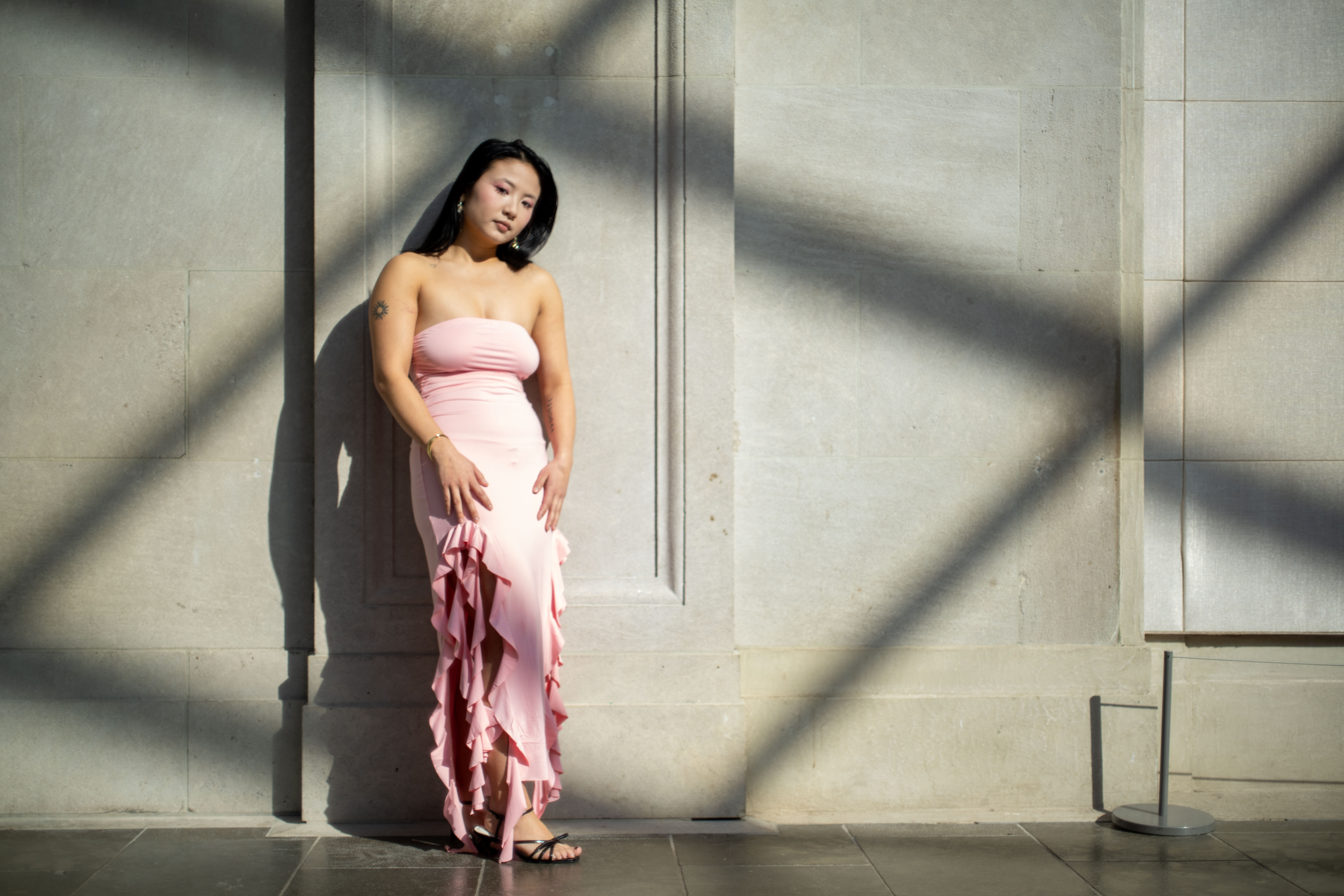
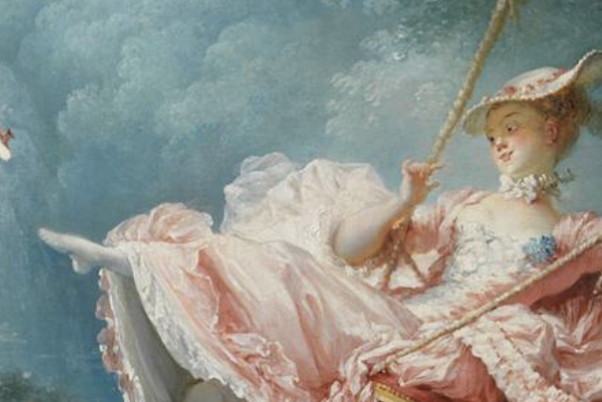
According to the Columbus Museum of Art (CMA), the piece “Easter Lilies” was created by Henriette Wyeth in 1964. Hurd Gallery writes that Wyeth was a well known realism painter who specialized in portrait, still life and floral paintings.
Wyeth loved capturing her subjects in the moment, showcasing raw emotion while preserving the air of mystery that surrounded them. Through her artistry, she understood that to feel emotions deeply is part of the beauty of life: “When I think about how I really do feel it overcomes me,” Wyeth said. “Then I wonder if I've done enough.”
Lewis emulates the simplicity and softness of the piece, while also conveying a sense of beautiful tragedy. The light pink dress flows similarly to a flower, the ruffles representing petals, and the model’s flower earrings help to elongate the silhouette of the outfit, like the stems of the lilies. The model wears a makeup style inspired by something called “Douyin” — a type of makeup often associated with “shimmery eyeshadow, pigmented pink blush and blurred lips,” according to Teen Vogue. Lastly, the model’s dark hair lays in a stark contrast to the lightness of the painting, symbolizing the touch of tragedy in the piece.
Model: Rohan Rao
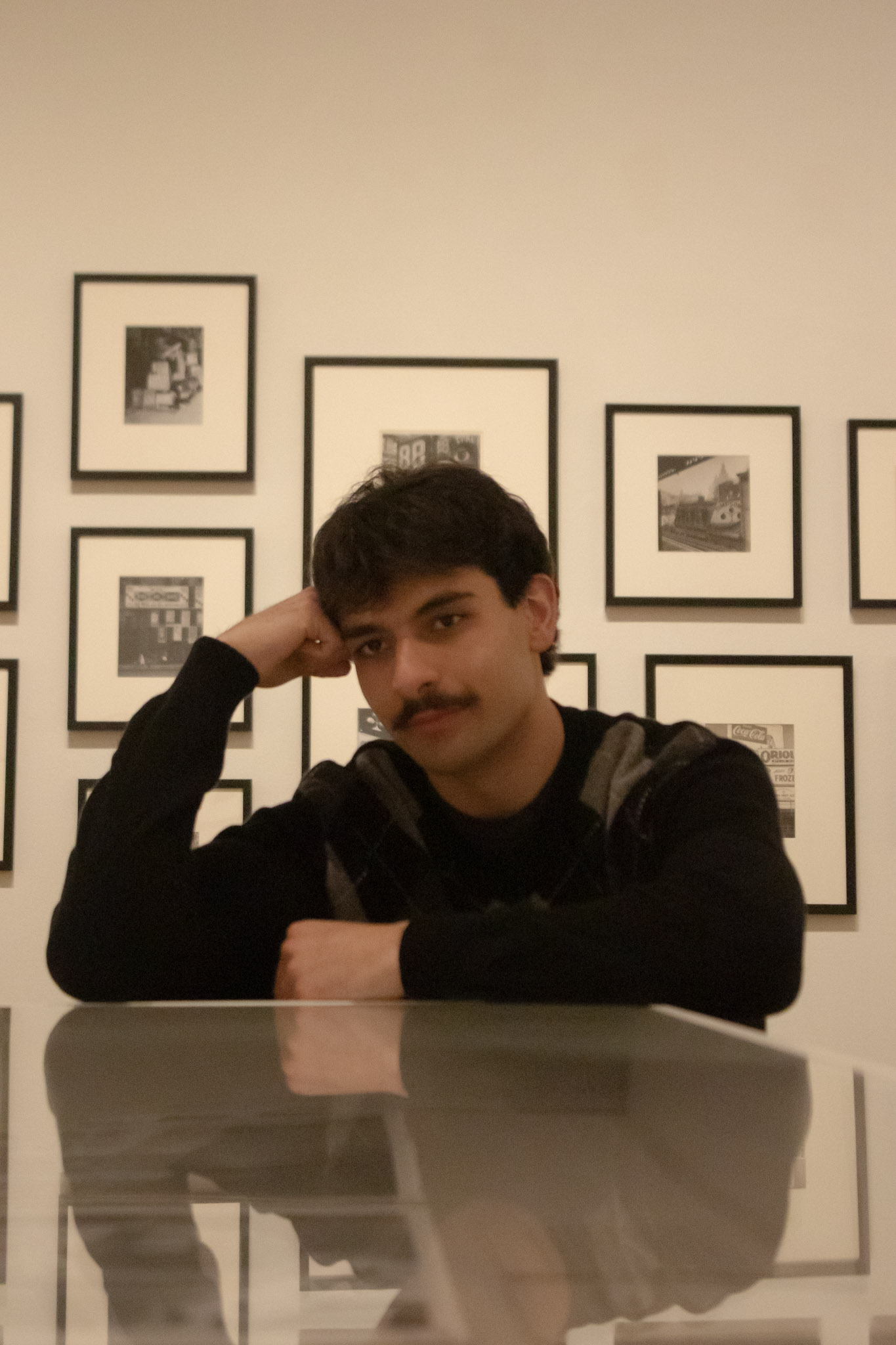
CMA’s “The Eye, Lower East Side, New York” was photographed by Bill Witt in 1948 by using gelatin silver print. Witt became famous for his street and documentary-style photographs, encapsulating the character of mid-20th-century New York City and the energy of everyday urban life. According to Holden Luntz Gallery, Witt’s work was often celebrated for its socially conscious criticism and humanistic lens.
Rao interprets the piece as needing to conform to society, almost as if being observed through an omniscient eye. This watchful eye communicates an invisible presence, daring the viewer to stray from the crowd. Wearing a plain, black belt, trousers and loafers to give the appearance of conformity, Rao conveys a subtle desire to stand out. His silent — yet observant — eyes mirror the eyes in the photograph.
Model: Aliyse Stokes
“Still Life with Flowers” was painted by Louis Bouché in 1919. According to CMA, Bouché was an impressionist muralist and painter who painted a variety of subjects, from outdoor scenery to household objects. He has made waves, The New York Times mentioning that his works incorporate an assortment of colors while leaning into an overall sense of warmth.
The painting features bright pops of color against a cool-toned background, representing a layer of formality interrupted with a hint of playfulness. Stokes portrays this with a long, green dress, dark blue scarf, colorful accessories and heels. Her hair is styled to mimic the flowers in the vase with rich makeup that acts in contrast to the clothes.
Model: Lizzie Garver
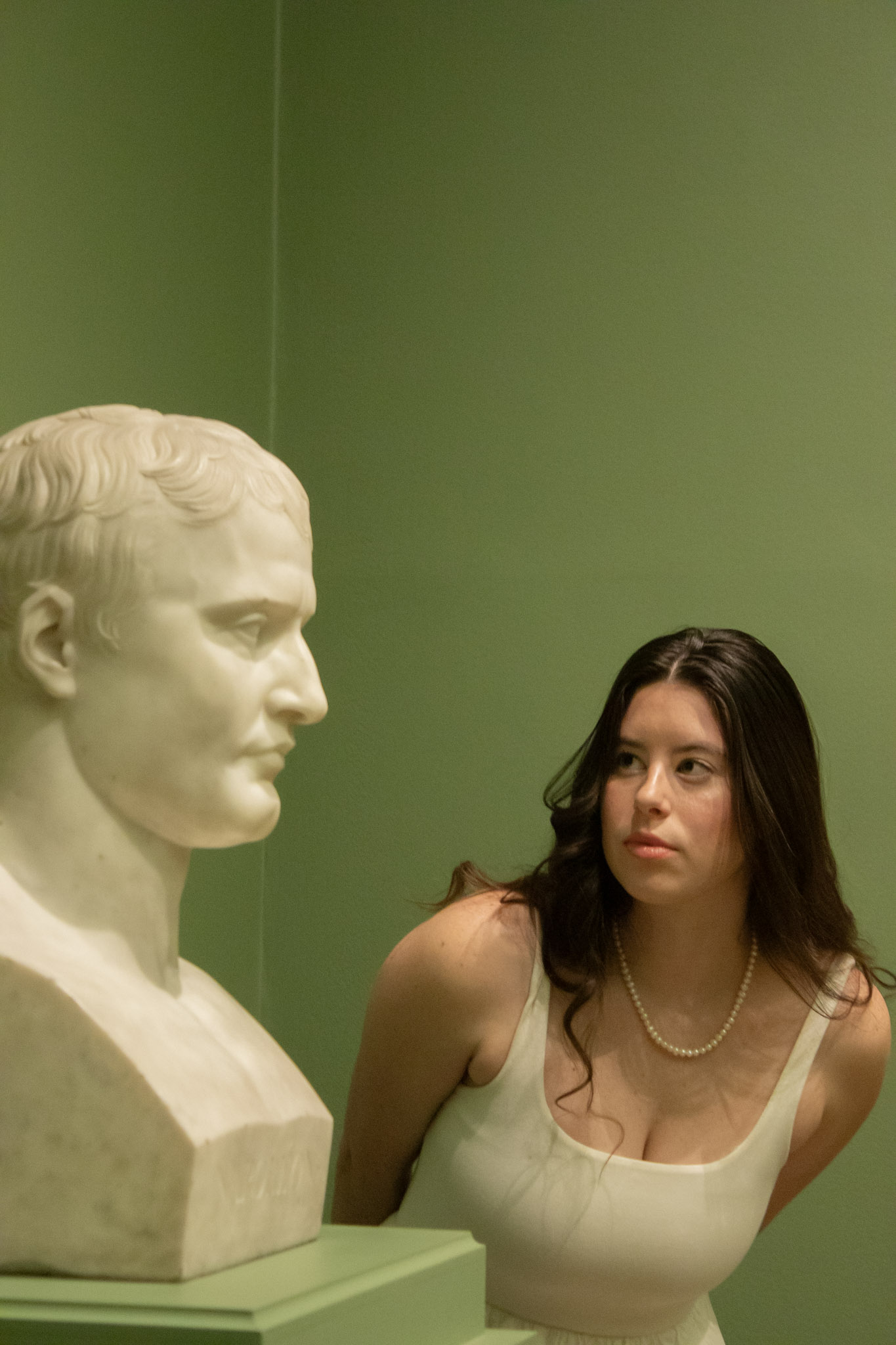
“Napolean” is a marble sculpture, made in 1807 by Antoine-Denis Chaudet. Chaudet was a neo-classical sculptor and painter who was once employed by Napoleon, himself, according to the British Museum. The piece imitates old portraits of Roman officials and absolutely exemplifies power and authority.
Available for viewing through CMA’s online collection, “Interior of Oude Kerk, Delft” is an oil painting made by Cornelis de Man in 1660. De Man drew influence from French and Roman craft, according to The Leiden Collection, the painting featuring the inside of a Gothic church in the Netherlands.
Connecting with both pieces of art, Garver chooses to embrace ancient Greek aesthetics, balancing timeless beauty with youthfulness in a classic setting. The white dress, heels and flowing cover-up are similar to that of a young Juliet Capulet, while the pearls, shimmering makeup and dark curls give the outfit a romantic touch.
Model: Rithika Selvakumar
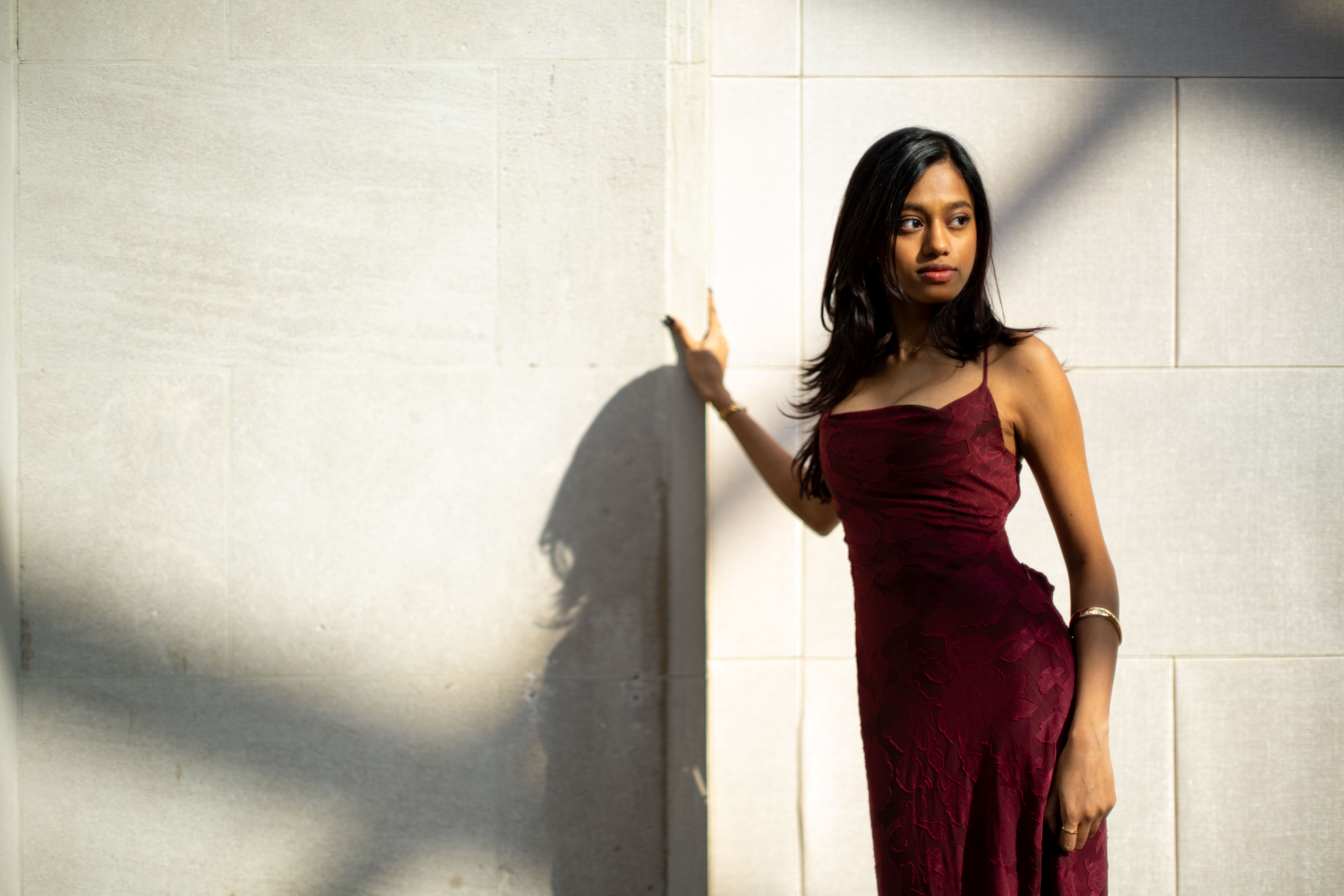
“Autumn Leaves—Lake George, N.Y.” is a gorgeous oil painting from 1924, by Georgia O’Keeffe. O’Keeffe is one of the most renowned modern artists of the 20th century, and her biography from the Georgia O’Keeffe Museum tells us that many of her works feature favorite motifs and are drawn from her own life.
The dramatic colors used in the painting are beautiful and bold, and Selvakumar channels this with an elegant burgundy dress, traced with an autumn leaf design. She sports heels and gold jewelry to elevate the look, with the final touch being the red undertones of her dark hair.
Model: Emma Sterbling

“Untitled (06.06)” is a laminated and mounted color coupler print, currently on view at CMA. This was created by artist Uta Barth in 2006. Barth’s early photography focused on looking back on the physical self, detailed in a series of self portraits. According to Guggenheim New York, she later started implementing what she would eventually be known for: “...Blurry backgrounds created by focusing her camera on empty foregrounds.”
In her untitled piece, Barth chose the outline of a flower as her subject. She used a red background to make the white of the flower more striking, and Sterbling imitates this difference with a long, red dress and white scarf. Her makeup is intricate with red and white details that mimic the picture's aesthetic.
All of this leads us to the age-old question: can art truly be separated from the artist?
Here’s the thing — if the art and artist inspire each other in a continuous cycle, there is no meaning without the other. Pay attention to the art that inspires you. In the end, it’s not just a reflection of what you enjoy, but a reflection of who you really are.
SHOOT LEAD Kat Gallaugher | PHOTOGRAPHERS Maggie Harkins, Sandra Fu, ASST. PHOTOGRAPHER Averie Ison | MODELS Kaia Lewis, Rohan Rao, Aliyse Stokes, Lizzie Garver, Rithika Selvakumar, Emma Sterbling